%20(1).jpg)
“It captures the phone call, you can hear the message, you can hear the notes. For me, this is really a game changer.”
About the Business
Avery runs two closely connected operations within New York City’s affordable housing ecosystem. He manages 16 affordable housing properties in the Bronx, totaling 294 units, and also runs Hudson Loop, a company focused on tenant-in-place renovations—upgrading apartments while residents remain in their homes.
That work requires constant coordination and communication to keep projects moving without disrupting tenants’ lives. Across both operations, Avery oversees a large, distributed team of 42 frontline workers, five managers, six office staff, and eight superintendents, making communication a central operational challenge.
The Challenge
Avery’s workload isn’t just busy—it’s relentless. His day begins immediately with messages coming in across multiple channels: emails, texts, calls, emergencies, and meetings.
Even with assistants in place, communication frequently bottlenecked around him. Before Beside, missed calls and unanswered messages were common. Text volume alone could spike into the hundreds, creating constant inbox chaos and pulling Avery into every issue directly.
At peak, Avery estimates handling around 125 calls per day. In his world, missed calls aren’t just inconvenient—they can mean lost deals, delayed projects, unresolved repair issues, or even missing something personal. The cost was both operational and human.
Finding Beside
Avery discovered Beside through Instagram—back when it was branded “M1”—and immediately recognized its potential. What stood out wasn’t novelty, but functionality: automated intake, appointment scheduling, text follow-ups, and clear notes that reduced communication friction.
“As soon as I heard it, I was like: I need to have that. It scheduled appointments, sent me text messages, and gave me clear notes.”
Why He Adopted It
Avery evaluated Beside by comparing it directly to hiring virtual assistants. The value wasn’t theoretical—it was immediate leverage. Instead of adding another human layer, Beside gave him an operational system that protected his time, captured information reliably, and kept work moving while he was in meetings.
This wasn’t AI for experimentation. It was AI as infrastructure.
What Changed
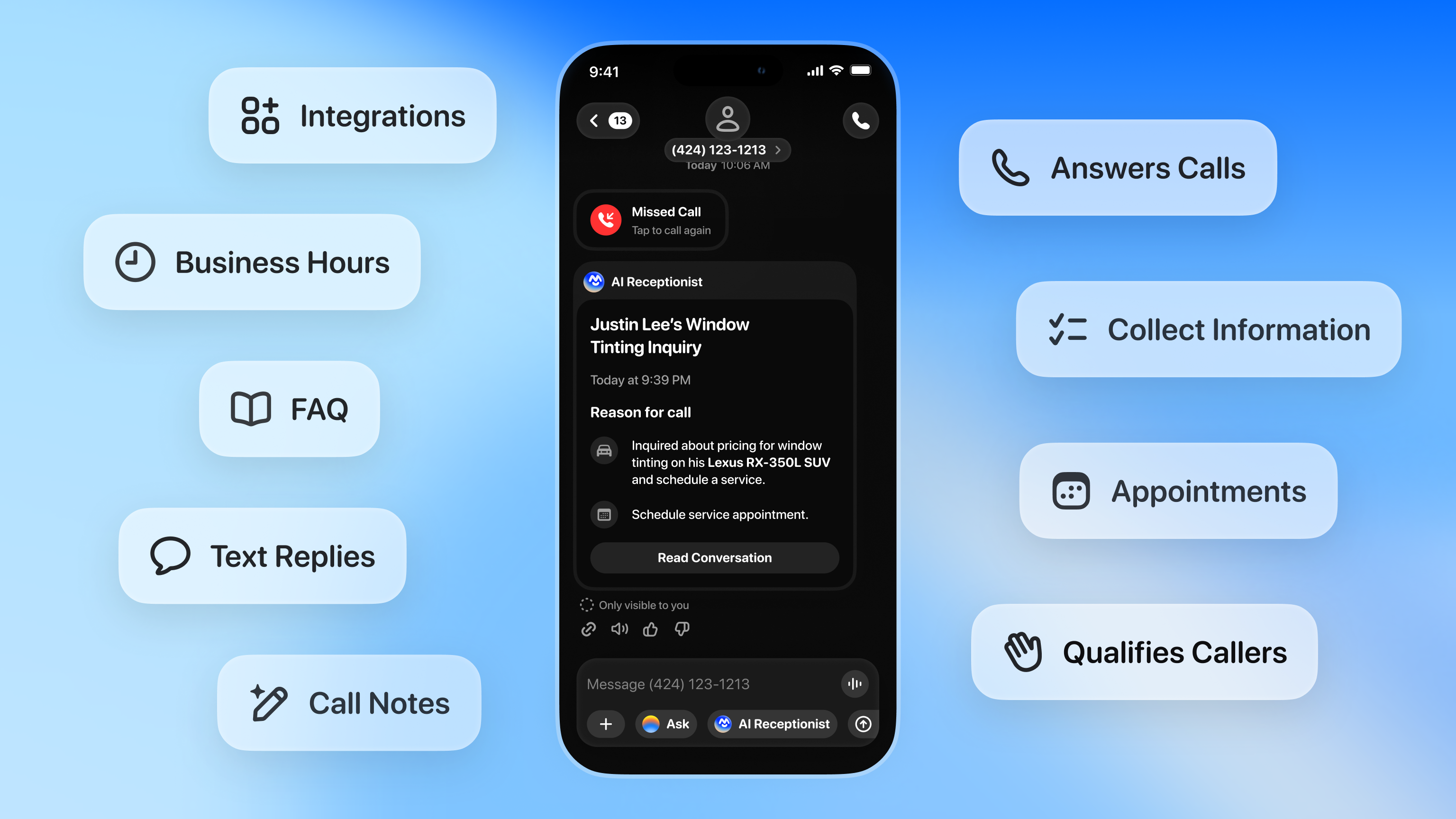
With Beside, inbound communication no longer depends on Avery being immediately available. Calls are answered while he’s in meetings, coordinating across teams, or handling urgent issues in the field. Appointments can be scheduled, texts sent, and structured notes captured—without pulling him out of what he’s doing.
“When I can’t get to it—like right now I’m in a meeting—they’ll call my phone, set an appointment, send a text, and I’ll get notes.”
%20(1).jpg)
The system has become reliable enough that Avery recently added a second number, with plans to dedicate it specifically to dispatch. Beside is no longer just a personal productivity tool—it’s becoming part of the operating model.
Instead of guessing or relying on memory, Avery always has context. When an unfamiliar number calls back, he can review prior notes and immediately understand who the person is and what the issue was. Daily recaps have become a simple control layer, surfacing follow-ups that would otherwise disappear into noise.
“At night you get the daily recap. That’s really good for me.”
.jpg)
Altogether, Avery estimates saving four to five hours per day—not because work disappears, but because Beside removes rambling calls, repetitive explanations, and unnecessary back-and-forth. Call records also provide a reliable reference when questions or disputes arise, improving accountability across teams.
How Customers Experience It
Avery uses his own voice for the AI receptionist, creating a familiar and reassuring experience from the first ring. Callers don’t feel like they’ve hit a dead voicemail—they feel acknowledged, guided, and taken seriously. In many cases, they get what they need immediately, without waiting for a callback.
The Mission Behind the Work
Avery’s motivation is clear: keeping New Yorkers in their homes. His work centers on maintaining affordability, improving building conditions, and strengthening communities through responsible renovation and partnerships with social service organizations.
What’s Next
Looking ahead, Avery plans to grow both sides of the business—taking on more tenant-in-place renovation projects, expanding his affordable housing portfolio, and increasing community impact through respectful, tenant-focused development.
At a Glance
- Role: Affordable housing executive director + owner/operator
- Company: Hudson Loop
- Team size: 42 workers, 5 managers, 6 office staff, 8 superintendents
- Inbound volume: 125 calls/day + 500–600 texts at peak
- Before: missed calls, message overload, lost opportunities, personal spillover
- Now: AI voice + real-time intake, searchable notes, daily recap, dispatch expansion
- Time saved: 4–5 hours/day