.jpg)
“In my profession I need complete silence — I need to be really focused.”
About the Business
Michael runs Integral Pianos in New York City. A second-generation piano technician, he didn’t originally plan a career in music. While studying finance, a short-term job at a piano store introduced him to repairs, and he quickly discovered a passion for the craft.
What began as a temporary role turned into a full-time business. Michael expanded from repairs into tuning and sales, responding directly to customer demand. Today, he works primarily solo, supported by trusted subcontractors, and serves a wide range of clients—from students and professionals to schools, studios, and churches across the city.-
The Challenge
Michael didn’t struggle because he couldn’t handle calls. He struggled because of when calls came in.
In piano work, silence is not a luxury—it’s operational. Tuning and repairs require full attention and a controlled environment. Interruptions aren’t just annoying; they can actively degrade the quality of the work and the experience for the client in the room.
“I need complete silence I need the devotion to the instrument.”
.jpg)
But New York is a “call-now” city. When Michael couldn’t answer, callers often didn’t wait. They simply dialed the next technician.
That reality pushed him into a difficult loop.
To avoid losing work, he regularly interrupted appointments mid-session to answer the phone. But piano service calls require full conversations—you can’t price or schedule a job in a few seconds. While he tried to juggle both sides, the client in front of him watched their session get disrupted, and Michael himself sounded rushed or distracted, which could hurt trust on both ends.
Even when he followed up later, the opportunity was often gone. Call volume was also unpredictable. Some days brought a flood of inquiries, while other weeks were quiet. Seasonal swings made it nearly impossible to anticipate demand or plan around it.
“When they call and I don’t answer, they just call the next number until somebody answers.”
The Switch
Michael discovered Beside through an ad on Instagram or Facebook offering a free trial. That trial was important because his decision depended on quality. The system couldn’t feel like a generic voicemail box—it needed to act as a credible front door for a premium service. A polished, professional interaction was far preferable to sending callers to a blank or impersonal voicemail.
The Moment It Clicked
Michael remembers a real call during a client visit—right when he was discussing something important and couldn’t be interrupted. Instead of picking up, he let it route to Beside.
After the appointment, he listened in his car: the recording, the summary, the intake. He wanted “good enough to protect focus” without losing the lead.
It delivered.
“I was very impressed, it did what I wanted it to do—I was happy that I had it.”
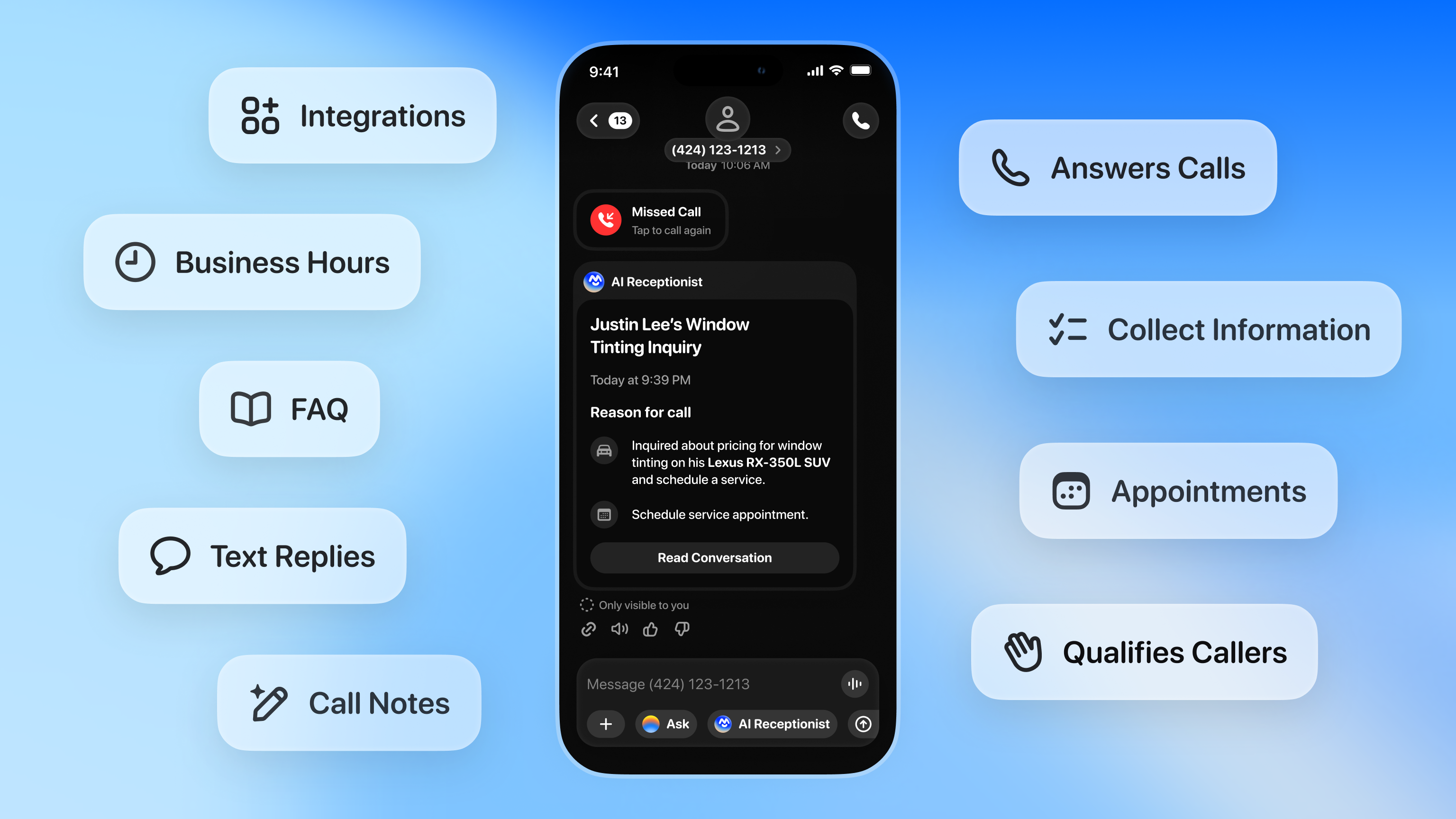
The Transformation and Impact
Focus stays on the instrument and the client
Beside reduced the need to interrupt appointments. Michael no longer has to choose between the person in front of him and the person calling.
“Before I had to break away ten minutes answering questions, now that has changed a lot.”
%20(1).jpg)
That change is subtle but powerful: he can sound calm, present, and professional—because he actually is.
Faster filtering
Michael gets spam, scams, and phishing calls—sometimes long ones. Beside absorbs those conversations, and the summary makes it obvious when something isn’t a real customer.
“It saved me five minutes of my time and a lot of my nerves.”
A better first impression than voicemail
Instead of leaving callers unsure of what to say—or saying nothing at all—Beside guides the conversation by asking relevant questions and setting expectations. Even when callers hesitate, they still share enough information for Michael to follow up with proper context.
Summaries + recordings as a two-step workflow
Michael does use summaries and transcripts, but he relies heavily on the recordings because speech can be messy: interruptions, hesitations, unclear phrasing. The summary helps him decide whether it’s worth listening
Time saved
Michael estimates 1–2 hours per week, depending on the week. But the bigger gain is accuracy: he can re-check details (phone number, address, entry notes) without having to call the customer back to confirm basics.
Working on the Business, Not Only in It
Michael also described a psychological shift: he feels less guilty about missed calls because callers are still being “met” by something that can capture intent and move the conversation forward.
“That feeling is much less present because I know somebody actually answers their calls.”
.jpg)
And he’s thinking beyond today: he expects more AI-to-AI interactions over time and sees systems like this as a practical response to the rising cost of human reception and the flood of irrelevant inbound calls.
At a Glance
- Business: Integral Pianos
- Founder: Michael Chudner
- Team: Mostly solo + trusted subcontractors
- Core challenge: Calls interrupt silent, high-focus work
- Before Beside: broken appointments, rushed conversations, lost leads
- Now: calmer client sessions, faster lead capture, spam filtering, better intake than voicemail
- Time saved: ~1–2 hours/week